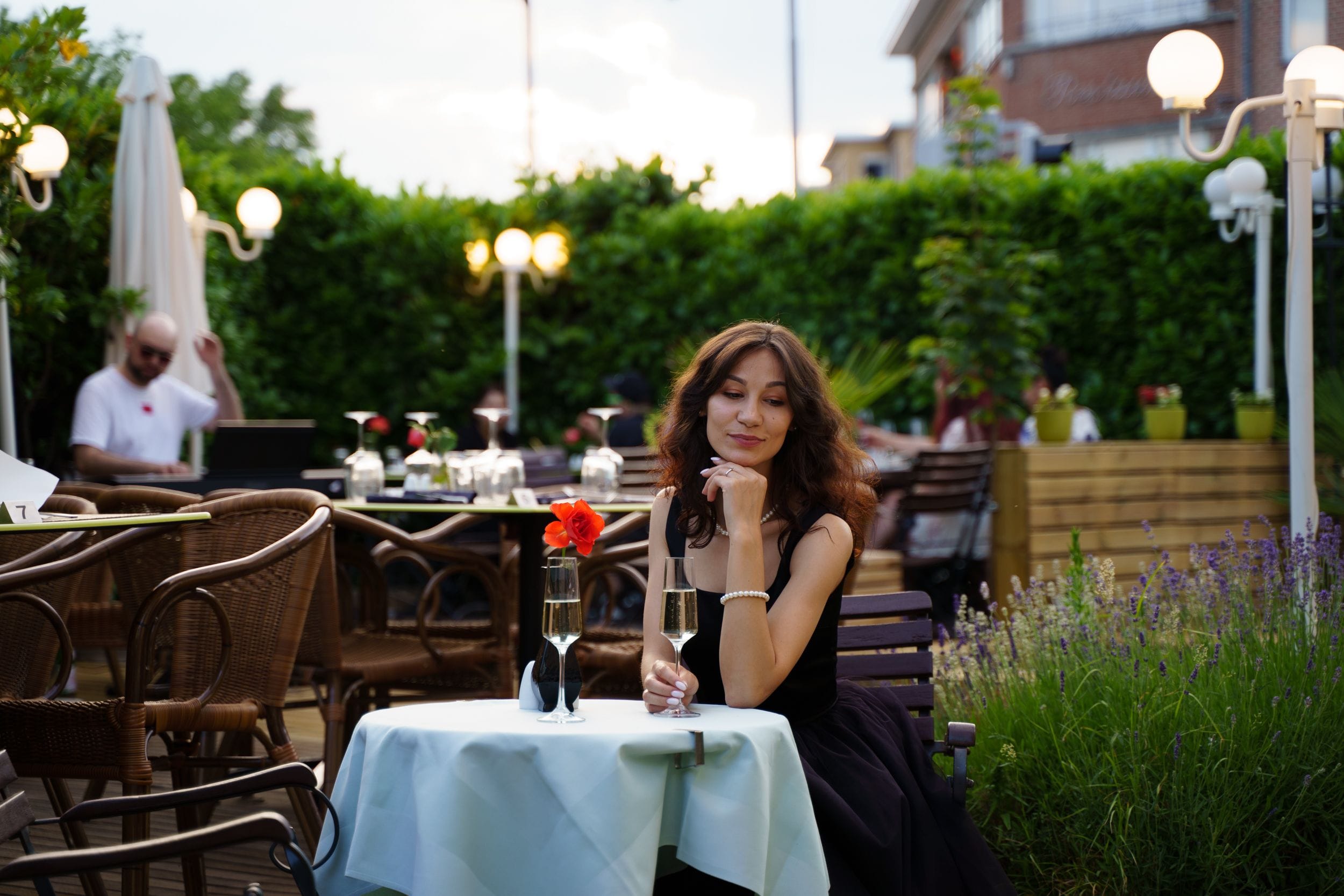
Image by Pexels


Summary:
Dining alone isn’t lonely—it’s empowering. Learn to enjoy your own company and find confidence in solitude.
Is It OK to Dine Alone? (Yes, and Here's Why)
There’s a hot new restaurant in town, and you’ve been wanting to check it out. You and your friends have been trying to find a time when all of you are free, but it just doesn’t seem feasible. So, you decide you’re going to go eat there by yourself when you have the time.
Now, imagine this scenario: you are seated in the new restaurant, a nice table all to yourself. The restaurant is almost filled with couples, friends, and families. How do you feel?
Does it make you feel uncomfortable? Out of place? You might not be alone. Dining alone is not a widely accepted social norm; it is usually deemed “lonely” or "sad." This conditioning might prevent us from seeing it as an act of empowerment or seeking solitude.
But that is exactly what it is.
Dining alone is one of the simplest ways to build a relationship with yourself, to feel comfort in your own company. In a world where the constant noise of notifications, updates, conversations, and expectations feels inescapable, sitting down for a meal in the quietness of just you and yourself might seem alien and intimidating. But that discomfort is often the first step toward self-awareness.
Psychologists have long emphasized the importance of solitude. As researcher Sherry Turkle notes in her famous TED Talk, Connected, but alone? (2012),
“Solitude is where we find ourselves so that we can reach out to other people and form real attachments.”
Dining alone is also an exercise in independence. It helps you shift your focus from having to wait for someone’s company to be able to enjoy yourself to choosing yourself as a form of joy in itself. Instead of postponing experiences until they align with others’ schedules, you allow yourself to live in the moment.
Research published in the Journal of Consumer Research (Ratner & Hamilton, 2015) suggests that people often overlook or underestimate how enjoyable solo experiences can be due to social norms or perceptions, but those who engage in them, such as dining alone or travelling alone, report that it results in meaningful personal satisfaction.
This shows that if we work to get over the initial awkwardness or discomfort we feel with being spotted alone in public, it leads to an empowered and joyous outcome.
Of course, the discomfort is real. You may feel watched, judged, or out of place. But more often than not, that feeling is internal. Most people are far too absorbed in their own conversations and experiences to notice you. And even if they do, the perception of “sadness” attached to solitude is a social construct—one that does not have to define your experience.
Over time, dining alone can become something you look forward to. It becomes a space where you can enjoy your food without distraction, observe your surroundings, or simply sit with your thoughts. It teaches you that your own company is not something to escape from but something to value.
So, is it okay to dine alone?
Yes. Not only is it okay, but it is also worth making it a part of your lifestyle.
Because sometimes, the most important relationship you build is the one you have with yourself—and it can begin with something as simple as a table for one.
About the author

Sinduja Sivarajah
Brand Strategist
I am a creative brand strategist and a curious doom-scroller who spends an unreasonable amount of time thinking about people, stories, and why we do the things we do. I write about the strange, funny, messy business of being human, and most times I'm still figuring it out myself.
Your thoughts below
If something here resonated or challenged you leave a comment. We read every one.
Published
Aug 07, 2025
Updated
Aug 07, 2025
Author
Sinduja SivarajahReading Time
5 min
Category
Personal growth
Related Articles

Am I Just Too Nice?
This article explains that kindness is not weakness but strength. It is rooted in authenticity.

Am I Being Productive, or Just Making Excuses?
Busy all day but still feel unproductive? Let's explore why constant hustle isn't always progress and what can truly move you forward.

Your Environment, Your Focus: How Spaces Shape Productivity
Productivity isn't just about discipline; it could also be your environment. Explore how our spaces shape focus, creativity, and well-being.
Comments
Share your thoughts and join the discussion. All comments are anonymous.
No comments yet. Be the first to share your thoughts!
Related Articles
Am I Just Too Nice?
This article explains that kindness is not weakness but strength. It is rooted in authenticity.
Am I Being Productive, or Just Making Excuses?
Busy all day but still feel unproductive? Let's explore why constant hustle isn't always progress and what can truly move you forward.
Your Environment, Your Focus: How Spaces Shape Productivity
Productivity isn't just about discipline; it could also be your environment. Explore how our spaces shape focus, creativity, and well-being.