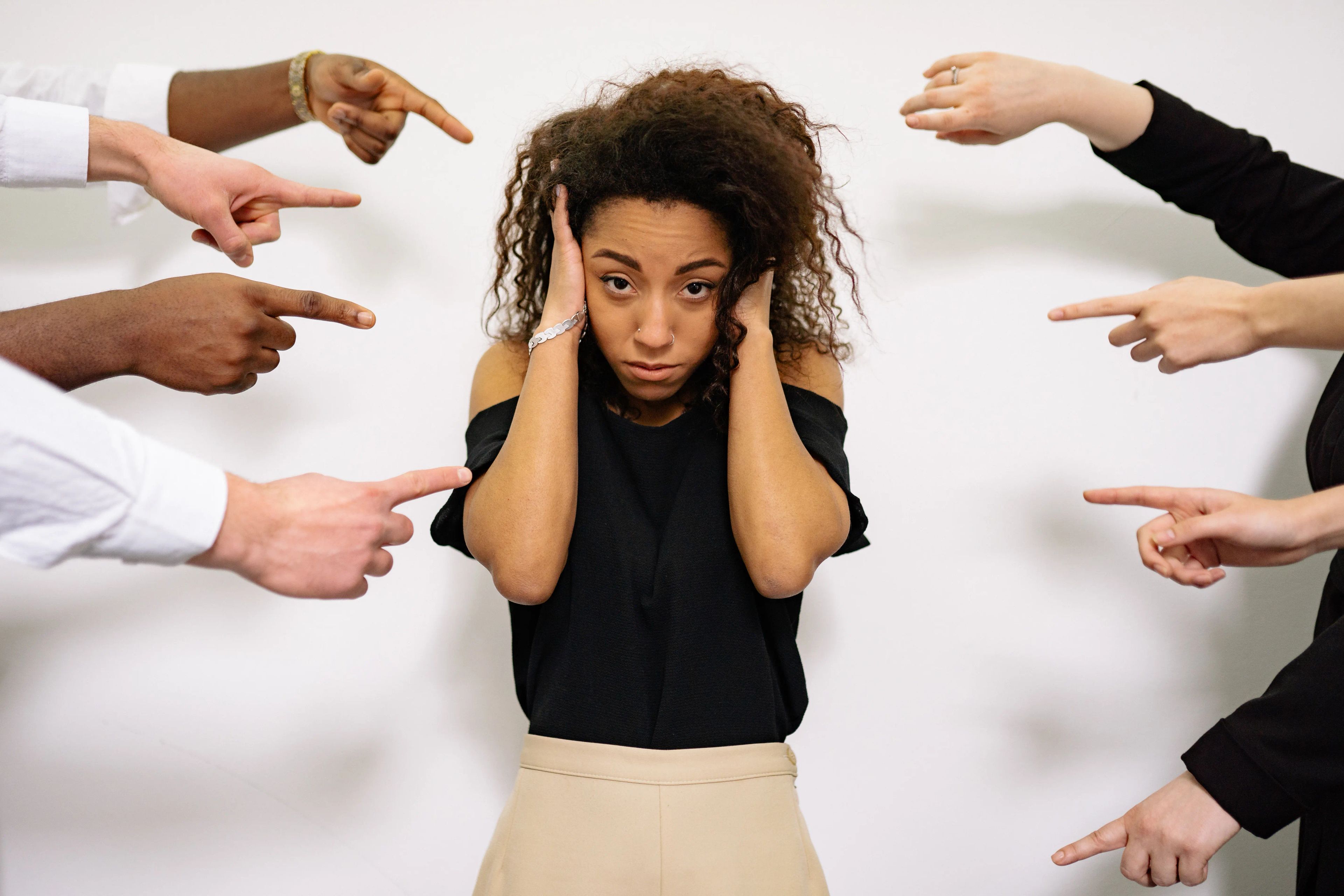
Image by Pexels


Summary:
Understanding the difference between personal choices and society’s expectations, and learning to live life on your own terms.
Why “What Will People Say?” Still Runs Our Lives
You make a decision. And even before that thought, you quietly ask yourself, "What will others think of it?" Living in a society, we often face judgements and will continue to face them, but fearing those and appropriating yourself unreasonably to the so-called societal norms can act as a silent venom. Career choices, social media posts, clothes, friendships, relationships, and lifestyle are often shaped by people's imagined reactions. Trying to validate what you feel is correct or not is inherently not bad in its sense, but what is destructive is replacing individual liberty to make free choices with social validation. Arguably, it makes us subscribe to the idea that we do not need an actual individual to explicitly police us; instead, we ourselves do it to validate our choices in regard to what is considered acceptable in society.
The life we are supposed to want
From an early age, most people are pushed to believe in the concept of a ‘Good Life’. Study hard, have a career, have a certain income, marry at the ‘right’ age, have kids and build a family. Having all of this is inherently not a bad idea, but the problem is the melancholy of thought when all of these stops feeling like a choice and rather becomes a parameter of a successful life directed by society by and large. The point of the question is who is the set of individuals or society by and large to push these ideas? Perhaps it is a belief that we quietly refurbish within ourselves through family discussions, institutions, films, etc. And so, it has become an accepted and established idea that if we do not follow a linear course of life as expected, we will fall behind. These expectations are a sign that we as individuals have been induced to adhere to what is accepted. Somebody chooses a career that interests them, but another may pursue it because it offers status; someone may genuinely want to get married, but another chooses the same due to social pressure, and the same happens with every little decision we are supposed to make. After all, not everyone is pushed to believe the same, but some lives are considered acceptable, desirable, or respected, and thus normalization of a recognized belief system starts, fading the distinction between a free choice and a socially induced choice. And maybe, we just don’t feel like accepting what society wants but choose anyway.
Free will vs. socially cultivated will
We as individuals are often shaped by our environment, so the inherent value system that we subscribe to is that our desire is subjected to being confirmed by the societal values. The idea here is not to say "ignore society and follow what you want"; we are a part of the existing social institution, and so that would not be entirely possible. But we need to confront this very fact and make a distinction between social conformity and what we as individuals wish. The real issue is when social approvals become so important that individual choice becomes rarely possible.
About the contributor
Public contributor
Sagalassis Kaur
Student
INDIA
Sagalassis Kaur is a writer with an interest in society, politics, public affairs, and contemporary social realities. Her writing explores the ideas, expectations, and everyday experiences that shape how people think, behave, and navigate the world around them. She is particularly interested in questioning social norms, examining overlooked perspectives, and bringing attention to conversations that deserve greater thought.
Your thoughts below
If something here resonated or challenged you leave a comment. We read every one.
Published
Nov 23, 2026
Updated
Nov 23, 2026
Author
Sagalassis KaurReading Time
4 min
Category
Personal growth
Related Articles

Is It OK to Dine Alone? (Yes, and Here's Why)
Dining alone isn’t lonely—it’s empowering. Learn to enjoy your own company and find confidence in solitude.

Can or Should I Have Fun, Too?
Explore the tension between modern productivity and the human need for joy. A poetic look at leisure guilt and the biology of play.

The Hidden Impact of Drugs and Alcohol on Personal Growth
A reflective look at how drugs and alcohol shape motivation, emotional resilience, relationships, and the long process of personal growth.
Comments
Share your thoughts and join the discussion. All comments are anonymous.
No comments yet. Be the first to share your thoughts!
Related Articles
Is It OK to Dine Alone? (Yes, and Here's Why)
Dining alone isn’t lonely—it’s empowering. Learn to enjoy your own company and find confidence in solitude.
Can or Should I Have Fun, Too?
Explore the tension between modern productivity and the human need for joy. A poetic look at leisure guilt and the biology of play.
The Hidden Impact of Drugs and Alcohol on Personal Growth
A reflective look at how drugs and alcohol shape motivation, emotional resilience, relationships, and the long process of personal growth.